Name Dropped: Why Shoppers Are Finally Letting Go of the Logo and Buying What Actually Works
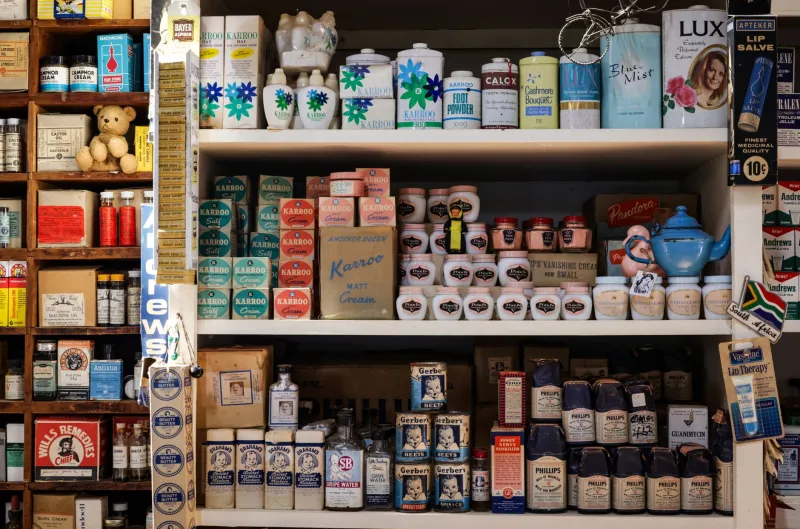
There's a particular kind of buyer's remorse that nobody talks about enough. It's not the regret of impulse-buying something you didn't need. It's the slow realization that the expensive, brand-name thing you carefully chose — the one with the recognizable logo and the premium price tag — is doing exactly the same job as the $18 version you almost passed over. Maybe worse.
More Americans are having that moment. And instead of shrugging it off, they're changing how they shop entirely.
The Logo Was Never the Product
Brand loyalty has always been a psychological game as much as a practical one. When you reach for a familiar name, you're not just buying a product — you're buying certainty. The brand's reputation becomes a kind of mental shortcut, a way of outsourcing the decision-making to someone else's track record.
That worked pretty well in a world where your options were limited to whatever sat on the shelf at your local store. You couldn't easily compare a well-known blender to an unfamiliar one. You couldn't read 400 reviews from real people who'd used both. You went with what you recognized because recognition was the only signal you had.
But that world is gone. Online shopping didn't just expand the number of products available — it fundamentally changed the information landscape. Now, the product you've never heard of comes with a detailed spec sheet, verified purchase reviews, side-by-side comparisons, and sometimes a return policy that makes the risk feel close to zero. The playing field leveled out. And a lot of shoppers noticed.
What's Actually Driving the Switch
Talk to people who've made this shift, and a few patterns come up over and over.
First, there's the pandemic-era budget recalibration. When millions of Americans were suddenly rethinking every dollar they spent, the math on brand premiums got harder to ignore. Paying $60 more for a name felt a lot less justifiable when the no-name alternative had a 4.7-star rating and 2,000 reviews saying it held up beautifully.
Second, there's the rise of what you might call the review-first shopper. This is someone who doesn't even glance at the brand until they've already looked at the specs and the feedback. The brand is almost an afterthought — a data point rather than a destination.
Third — and this one's interesting — there's a growing skepticism about marketing itself. Younger shoppers in particular have grown up watching brands craft elaborate stories about their products, and they've gotten pretty good at spotting the gap between the story and the substance. When a brand's main selling point is its own legacy, that's a red flag, not a reassurance.
The Hidden Advantage of Going Unknown
Here's something that doesn't get said enough: lesser-known brands often put more into the actual product because they have less to spend on the packaging, the advertising, and the influencer deals. Their budget goes somewhere, and sometimes it goes into better materials, tighter quality control, or a more thoughtful design.
That's not universally true — there's plenty of low-quality stuff hiding behind a clean product listing. But the point is that brand recognition and product quality are not the same thing, and treating them as interchangeable is exactly the kind of lazy thinking that keeps people overpaying.
Online marketplaces have become the great equalizer here. When you're browsing a curated selection of products — like you'd find at DZY Shop — a no-name kitchen gadget sits right next to a legacy brand's version. Same page, same format, same chance to prove itself. The only thing doing the talking is the product itself.
A Practical Framework for Judging Products on Merit
So how do you actually make smarter calls when you're not leaning on brand recognition as a crutch? A few approaches that experienced shoppers swear by:
Start with the specs, not the story. What materials is it made from? What are the dimensions? Does it have a warranty? These are objective details that don't care about the brand name attached to them.
Read the critical reviews first. Five-star reviews are useful, but the 2- and 3-star ones tell you what actually goes wrong. Look for patterns — if multiple people mention the same issue, that's real information. If the critical reviews are mostly about shipping delays or packaging, the product itself might be just fine.
Check how long the seller has been operating. A brand you've never heard of that's been selling for three years with consistent ratings is a very different proposition from one that launched last month with suspiciously perfect feedback.
Think about the use case honestly. Are you buying something you'll use every single day for years? Maybe that's worth paying more for, regardless of brand. Is it something you'll use a handful of times? Then the calculus shifts dramatically toward finding the most functional option at the lowest price.
Give yourself permission to experiment. The return policies on most reputable online platforms have made low-stakes experimentation genuinely possible. Buy the unknown brand. Try it for a week. If it doesn't hold up, send it back. That's a far better testing method than trusting a logo.
What You're Really Paying for When You Pay for a Brand
None of this means well-known brands are always overpriced or that their reputation is entirely manufactured. Sometimes a brand has earned its premium through decades of consistent performance, and the price reflects genuine engineering or craftsmanship. That's real value.
But there's a difference between paying a premium for proven quality and paying a premium for familiarity. One of those is a sound investment. The other is basically a comfort tax — money you're spending so you don't have to think too hard.
The smartest shoppers have figured out how to tell the difference. They're not anti-brand. They're just brand-agnostic. They'll buy the recognizable name if it wins on merit. They'll buy the one nobody's heard of if that wins instead. The logo is just a label. What matters is what's inside the box.
The Easiest Place to Start
If you've been shopping on autopilot — defaulting to the same brands out of habit — the simplest experiment is this: next time you need something, search for what it does instead of what it's called. Look at the results without filtering by brand. Read the reviews. Compare the specs. See what rises to the top when you strip away the marketing.
You might end up right back at the familiar name. Or you might find something better that you'd never have discovered if you'd gone straight to the brand. Either way, you'll be making the decision — not the logo.
That's a pretty good place to be.